
Key Takeaways
- Trenchless sewer repair is faster, taking only one or two days compared with several days or weeks for traditional excavation.
- Traditional methods have lower upfront costs, but total costs over the long term often increase due to landscaping and restoration expenses.
- Property disruption is much lower with trenchless, as it preserves driveways, lawns, and hardscaping.
- Trenchless repair isn’t possible in every case, such as with severe pipe collapse or improper grading.
No homeowner wants to be faced with a sewer line issue. Not only are they disruptive, they’re expensive as well. Whether caused by aging pipes, tree root intrusion, or ground movement, timely repair of the damaged sewer line is essential. Home and business owners have two main options: traditional excavation and trenchless sewer repair.
Knowing what each one entails and the factors that affect them (cost, timeline, durability, and impact) will help you make the best decision possible. Partnering with a trusted Sacramento plumber skilled in both methods can be helpful in understanding the pros and cons of each.
Traditional Sewer Repair: Defined
Traditional sewer line repair involves accessing, repairing, or replacing the damaged pipe by excavating the ground above it. It’s called traditional because it’s been the go-to method used for decades, and it’s often the preferred solution for situations involving collapsed pipes or severely misaligned sewer lines.
However, it does have its drawbacks, mainly the disruption to the surrounding landscape and higher costs associated with restoration after the fact.
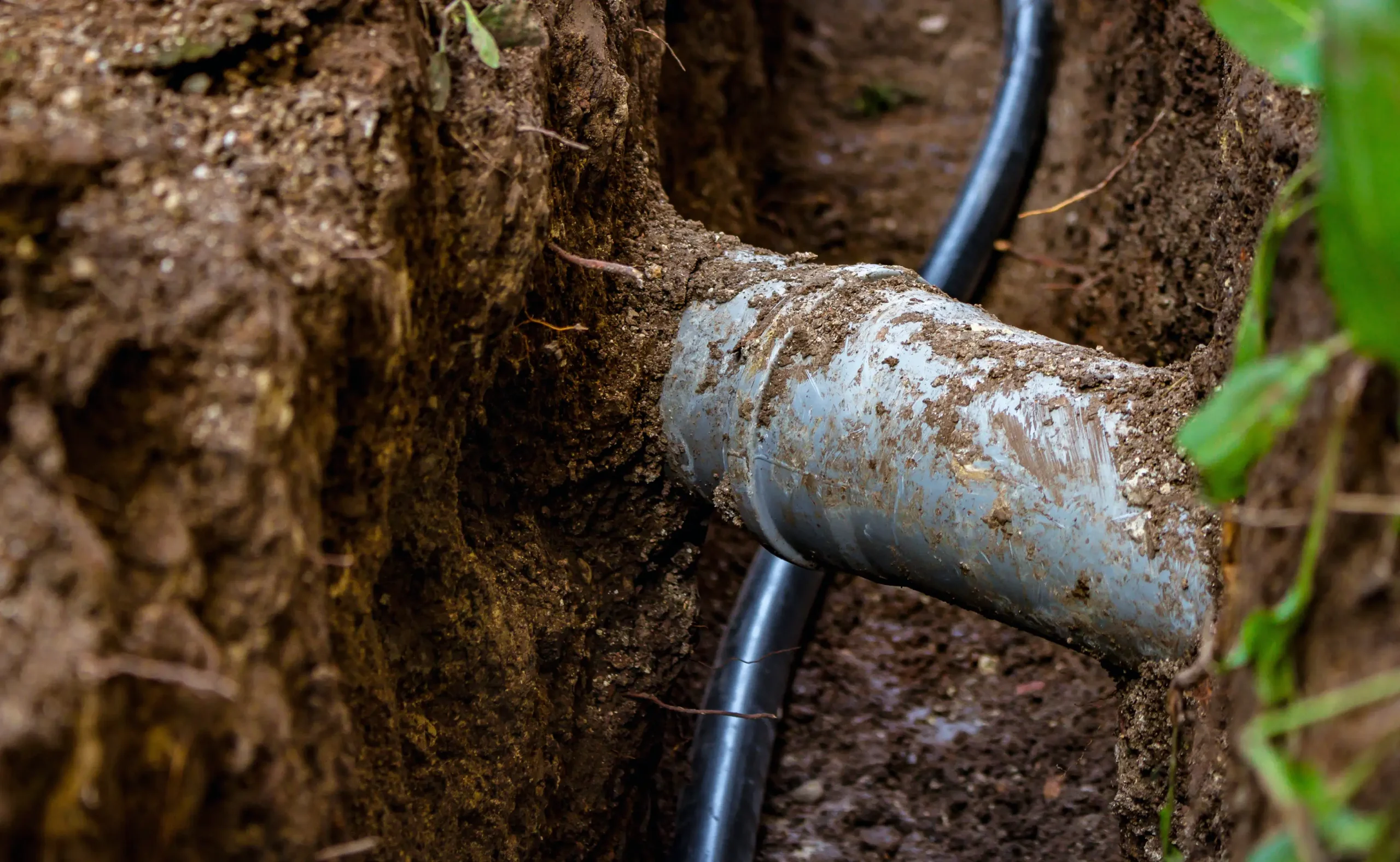
Traditional excavation is necessary for certain situations, but it involves extensive digging and restoration work afterward.
Pros of Traditional Sewer Repair
- Works well for many scenarios
- Allows full inspection and replacement of the pipe
- Lower upfront cost per foot
Cons of Traditional Sewer Repair
- Requires extensive digging
- Can damage landscaping, driveways, and sidewalks
- Takes longer to complete
- Higher total cost due to restoration afterwards
Trenchless Sewer Repair: Defined
Using advanced technology, trenchless sewer repair fixes or replaces pipes with minimal digging. In fact, technicians can access the line through small entry points rather than having to excavate the entire length of the pipe.
The two most common methods to achieve this include:
- Pipe lining: A resin-coated liner is inserted that hardens into a new pipe.
- Pipe bursting: This involves breaking the old pipe while pulling a new one into place.
Pros of Trenchless Sewer Repair
- Minimal disruption to property
- Faster completion time
- Lower long-term costs
- Environmentally friendly
- Highly durable materials
Cons of Trenchless Sewer Repair
- Higher upfront costs
- Cannot be used on completely collapsed pipes
- Requires specialized equipment and expertise
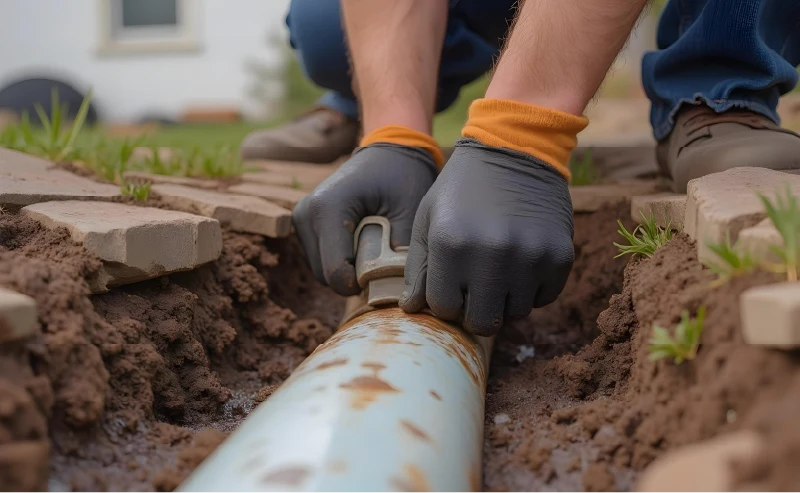
Trenchless sewer line repairs may cost more up front initially, but they can often be completed in just one day.
Cost Comparison: Upfront vs. Total Investment
Trenchless repair may command a higher initial price, but the total cost often tells a different story.
Traditional sewer repair and replacement typically cost between $50 and $250 per linear foot, with total project costs increasing significantly once excavation, labor, and restoration are included.
Trenchless repair falls within a similar per-foot range (about $60 to $250) but often brings lower overall costs due to the lack of digging and post-project repairs.
The biggest difference lies in the hidden costs. Traditional excavation frequently requires repairing landscaping, which can cost $4.50 to $12 per square foot, and driveway or concrete repairs ranging from $1 to $25 per square foot.
In many cases, these restoration expenses can add thousands of dollars to the total project cost. Trenchless repair, on the other hand, has a better value when all costs are considered due to preservation of your yard and hardscaping.
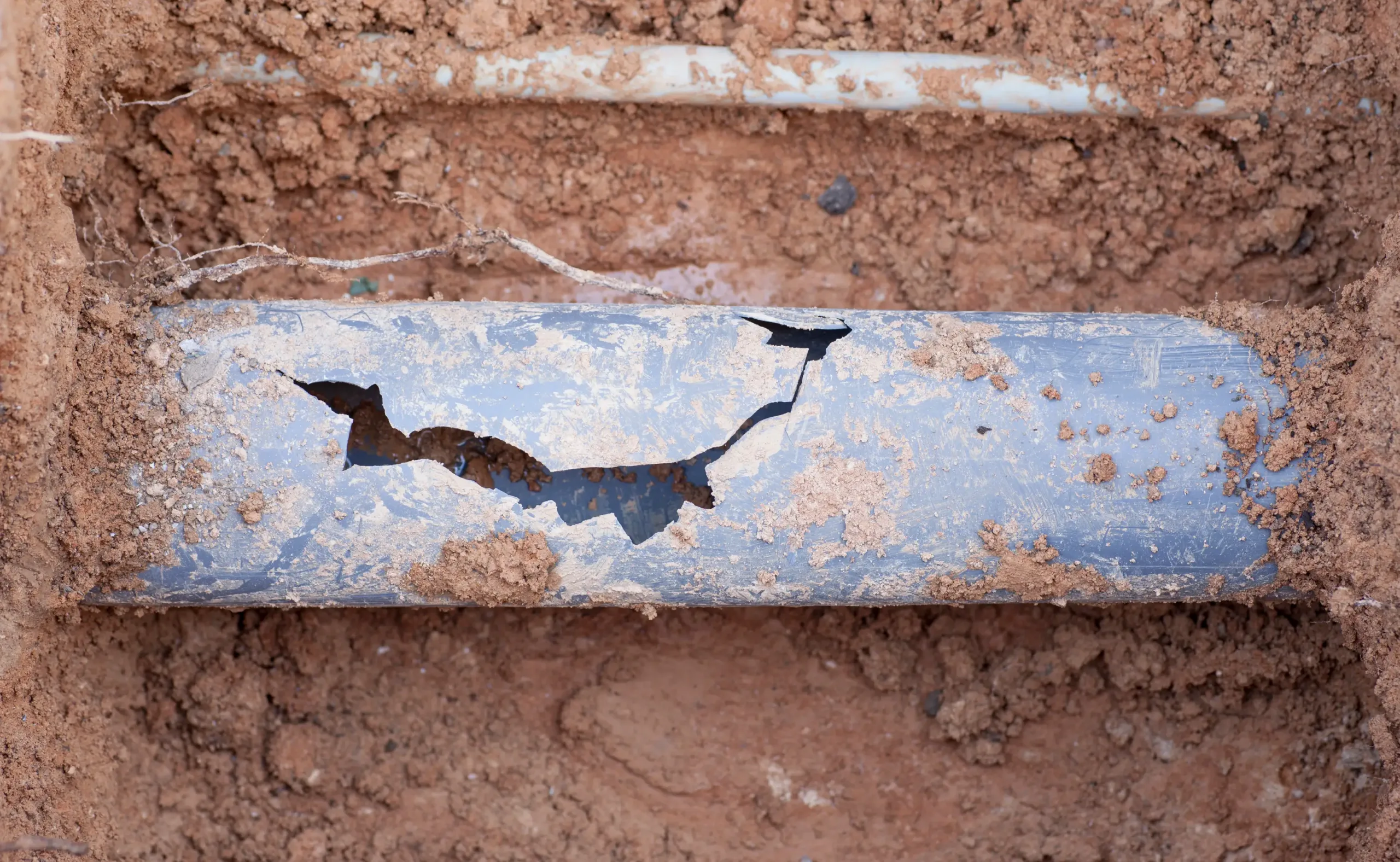
Restoration alone can exceed the cost of trenchless repair.
Time and Disruption
Timeline is important, especially for busy homeowners who don’t appreciate the disruption posed by traditional methods.
- Traditional repair takes 3–5 days for pipe work, and additional weeks as needed for restoration.
- Trenchless repair takes 1–2 days for most projects.
Homeowners could be without water service for days during traditional repairs, compared to just hours with trenchless solutions.
When to Choose Each Method
Choose Trenchless Repair If:
- Your pipes are structurally stable but damaged
- You want to preserve landscaping or hardscaping
- The pipe runs under a driveway or building
- You need a fast turnaround
Choose Traditional Repair If:
- The pipe is fully collapsed
- There are severe alignment or grading issues
- Trenchless access points are not feasible
Signs Your Sewer Line May Need Repair
Recognizing early warning signs can help you address sewer issues before they become larger, more expensive problems. Keep an eye out for these top five signs that you may need repair.
- Frequent drain clogs or slow drainage throughout the home
- Unpleasant sewage odors indoors or in your yard
- Soggy patches or unusually lush grass above the sewer line
- Gurgling noises coming from toilets or drains
- Sudden increases in water bills without clear explanation
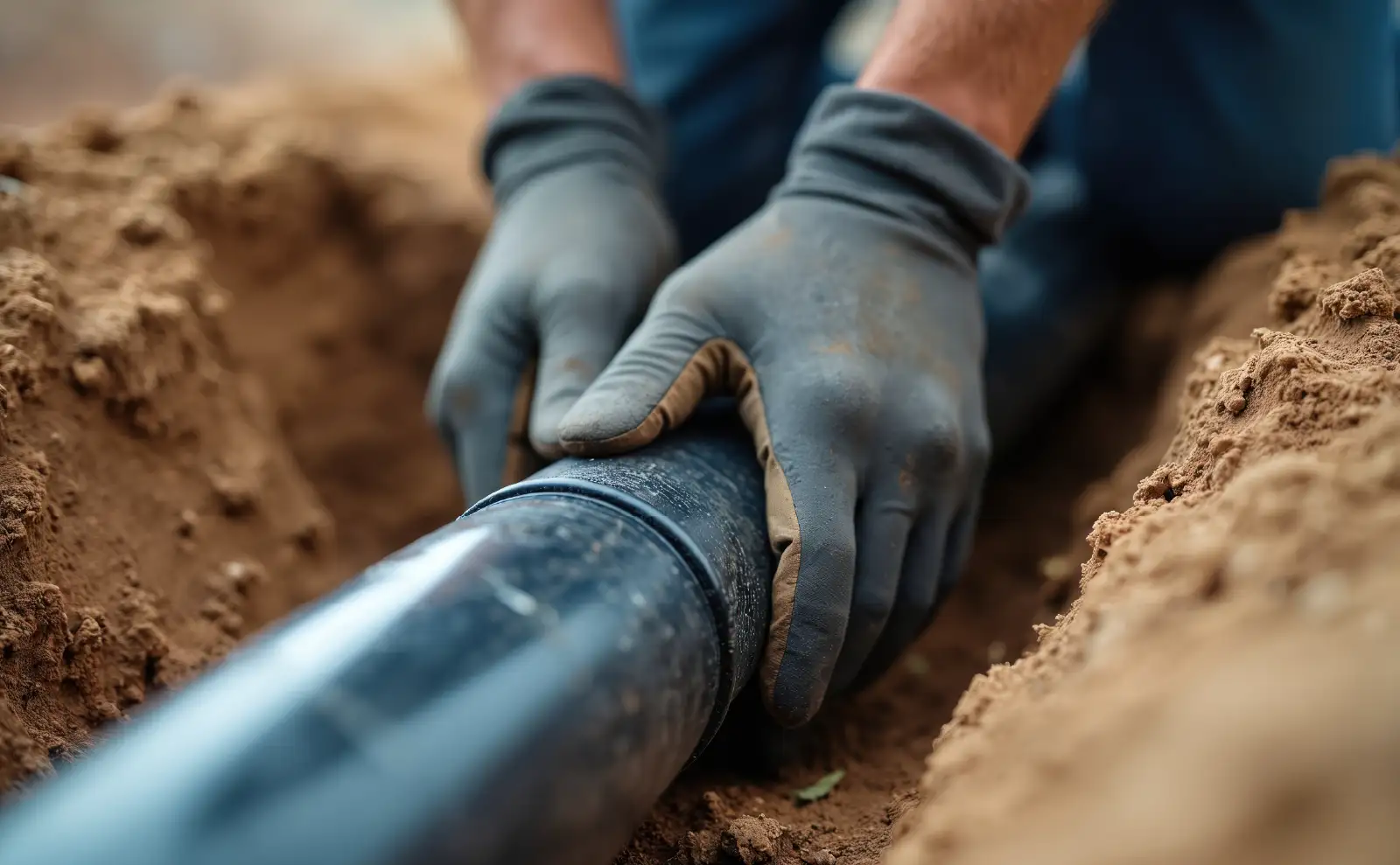
Recurring backups and odors are often early indicators of a failing sewer line.
FAQs: Trenchless vs. Traditional Sewer Repair
Q: Is trenchless sewer repair always more expensive?
A: No. While upfront costs can be slightly higher, trenchless repair often ends up more cost-effective due to reduced labor and restoration expenses.
Q: How long does trenchless sewer repair last?
A: Most trenchless solutions last 50 years or more, making them a long-term investment comparable to traditional replacement.
Q: Will trenchless repair damage my yard?
A: Very little. Trenchless methods typically require only small access points, preserving landscaping and structures.
Q: Can every sewer line be repaired using trenchless methods?
A: No. You are not a good candidate for trenchless repair if you have severely collapsed pipes or lines with significant structural issues. Traditional excavation may be the only option in these cases.
Q: Which method is faster?
A: Trenchless repair is significantly faster, often completed in 1–2 days, compared with several days or weeks for traditional methods.
Which Sewer Repair Option Is Right for You?
The right option for you will depend on factors such as cost, timeline, property impact, and long-term performance. While both trenchless and traditional sewer repair methods can be effective solutions, trenchless technology is gaining in popularity for its efficiency, durability, and minimal disruption. While traditional excavation remains necessary in certain complex cases, trenchless repair offers Sacramento homeowners an attractive alternative.